
熊出没之夺宝熊兵
Red Rice Note 7 Pro配置曝光:Mirong 675 Sony IMX586_我的网站

A |
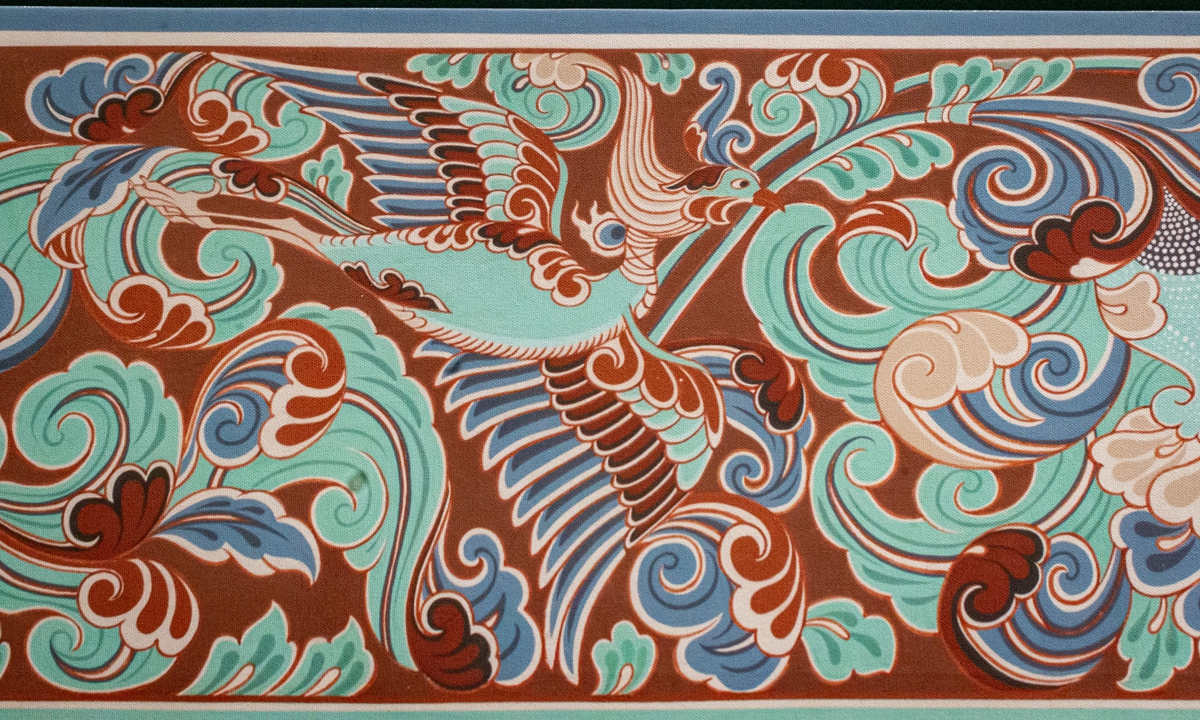
As an important part of Dunhuang art, decorative patterns are the carriers with the most rigorous compositional principles and the richest cultural spirit.
In the Dunhuang caves of Northwest China, there are numerous floral, cloud, flame, animal, and other decorative patterns. These patterns come from different periods and are found on and in structures and forms such as caisson ceilings, canopies, halos, costumes, border decorations and floor tiles, blending with statues, murals and architectural space.
Such patterns not only organically and harmoniously enriched and decorated murals, painted sculptures and entire caves, making them more splendid and perfect, but also developed their own period styles and characteristics, vividly recording the formation, change and development of Chinese decorative art and reflecting the social culture and customs of different times.
From the Sixteen Kingdoms (304-439) period through the Sui (581-618) and Tang (618-907) dynasties and beyond, Dunhuang cave mural art continued to evolve in both content and form with the changing times, and decorative patterns changed accordingly. From the three-petal leaf and honeysuckle patterns of the Northern Wei (386-534) to the scrolling-grass, baoxiang flower and linked-pearl patterns of the Sui and Tang and the medallion floral patterns dominated by mineral green in the Western Xia (1038-1227), Song (960-1279) and Yuan (1279-1368) periods, the pattern forms and color systems of different eras together form the historical lineage of Dunhuang decorative patterns, and also reflect the continuity and creativity of Chinese art.
I once led students in forming a research group on "Chinese Decorative Patterns of Dunhuang Through the Ages," systematically collecting, organizing, classifying and copying the decorative patterns on Dunhuang murals and painted sculptures, including the motifs. Through this sorting and copying, we conducted in-depth research and gained a full understanding of the historical culture, artistic features and decorative effects of each type of Dunhuang pattern, and clarified the causes, characteristics and historical evolution of each type. This is the "source" for contemporary design application.
Traditional patterns are an important source of inspiration for my designs. In design, on the one hand, the original appearance of traditional patterns should be preserved to a certain extent; on the other hand, they should be summarized, simplified, extended or enriched to make them more modern.
The ceiling pattern of the banquet hall of the Great Hall of the People was inspired by Tang Dynasty caisson patterns from Dunhuang. With a lotus as the center of the ceiling, and in line with the functional needs of the architectural structure, lighting and ventilation, it combines Dunhuang floral patterns with modern functions to create a spatial decoration with a distinctive national style. This design remains regarded as a model of the contemporary expression of traditional patterns.
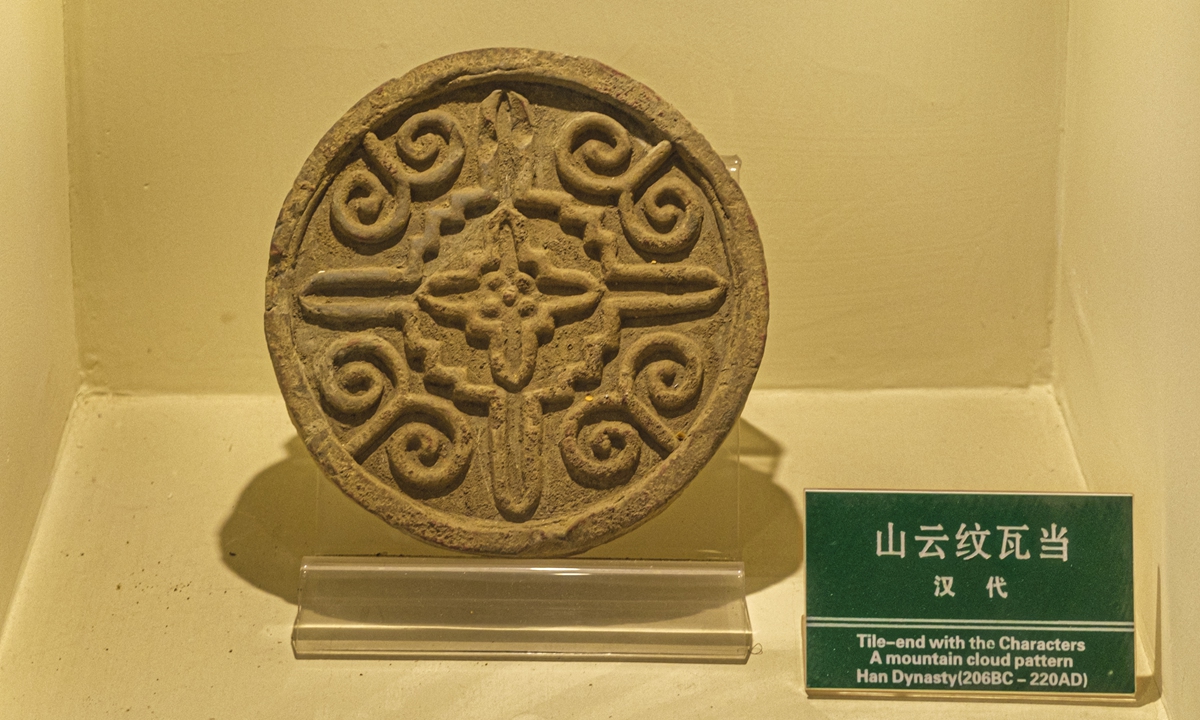
I was invited to serve as artistic consultant for the creative program "Nian Jin" (Auspicious Brocade) at China Media Group's 2024 Spring Festival Gala for the Year of the Dragon. Through natural patterns such as mountains and clouds of the Han Dynasty (206BC-AD220), bird and animal patterns such as flying phoenixes and auspicious lions of the Tang Dynasty, floral patterns such as peonies and laurels of the Song Dynasty, and auspicious patterns such as gourds and lanterns of the Ming Dynasty (1368-1644), we enabled the audience to appreciate the aesthetic tastes passed down by the Chinese people over thousands of years and the breadth and depth of fine traditional Chinese culture.
In contemporary society, as standardized, mass-produced industrial products have become dominant, people hope to find forms that reflect their own national cultural language and are distinctive, warm and pleasing. Traditional patterns can make people feel the depth of history and emotional warmth, and can further embody the cultural character of their nation through modern design.
The study and innovation of decorative patterns is a highly practical part of inheriting and promoting fine traditional Chinese culture. It concerns not only vision and beauty, but also cultural attitudes and identity. These patterns are not just a form of heritage found on murals or on other cultural relics; they can enter our daily lives and become cultural symbols in fabrics, utensils, spaces and even digital interfaces.
I believe that more and more later generations engaged in art and design will, on the basis of promoting fine traditional Chinese culture and adapting to people's current needs for culture, art and a better life, take innovative steps to create a new style of modern design art with Chinese characteristics - one that is national, scientific and popular, so that traditional Chinese decorative patterns can constantly generate new vitality and shine with new splendor.
The author is former president of the Central Academy of Arts and Design. This was compiled and translated by the Global Times English edition based on an article published by the People's Daily Overseas Edition on August 20.
。1月16日:在本月早些时候的红米7号会议上,小米官员还宣布了红米7号Pro手机。

B | 这款手机与红米7的最大区别在于索尼IMX 586传感器的使用。在参数方面,该传感器比三星GM1的红米7号更“漂亮”。它是Glory V20上的传感器,但索尼IMX 586直到去年年底才实现大规模生产,因此小米推迟了红米Note 7 Pro的发布一段时间,预计将于2月左右推出。

C | 据消息,红米7号Pro还将配备苗龙6150处理器,该处理器被转移到苗龙675。

D | 黄章之前曾声称,美祖9号将配备处理器。出人意料的是,红米注7 Pro将是继红米独立后的第二款产品,价格将略高于红米注7,但可以保证这将是一款性价比高的机器。
Current article:http://0xovdr.suilaoheirenzhaizhaikang.sbs/news/20260826_9364651.html
Published on:15:32:58